
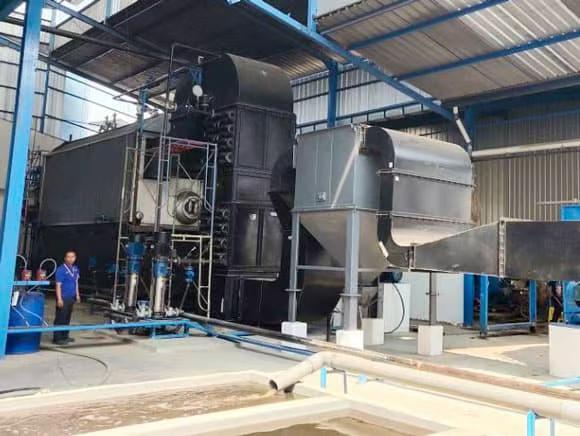
Maintenance is an energy measure, not only a safety measure
A boiler that passes inspection can still be wasting fuel. Scale, excess air, a worn burner nozzle or a leaking gasket do not usually trigger an alarm, but together they can add 5–8% to the annual fuel bill. A maintenance schedule with recorded readings is the cheapest way to find that money again.
This schedule is the interval-based routine YXBOILER recommends for industrial steam and hot water boilers. It complements, and never replaces, the manufacturer’s manual for the specific unit — see the manual library for the equipment family, and the energy consumption reference when comparing actual consumption with expected figures.
Daily checks — ten minutes, done by the operator
- Water level in the gauge glass: steady, within the marked range, no surging
- Steam pressure and temperature against the log
- Feedwater temperature and deaerator pressure
- Fuel pressure or gas supply pressure at the burner
- Flue gas temperature — a rise of 20 °C over the trend usually means fouling
- Visible stack emission and burner flame shape
- Abnormal noise, vibration or leakage at the boiler, pump and fan
- Bottom blowdown as per the water treatment programme, with the valve closing tight
Weekly checks
- Burner flame scanner and ignition sequence test
- Low water level cut-off test — simulate and confirm the burner trips
- High pressure and high temperature interlock test
- Water hardness test after the softener; record the result
- Feedwater pump alternation and standby pump start
- Inspect for leaks at flanges, valves and manhole gaskets
Monthly checks
- Full water analysis: hardness, alkalinity, chloride, dissolved oxygen, conductivity, pH
- Blowdown control: adjust continuous blowdown to keep conductivity within the boiler manufacturer’s limit
- Check burner electrodes, flame rod and nozzle for wear or carbon build-up
- Lubricate fan and pump bearings per the manual; check belt tension on forced-draft fans
- Test the stack damper and air/fuel ratio at low and high fire
- Inspect insulation and cladding for hot spots
Quarterly and annual work
- Internal inspection of the waterside and fireside when the boiler is open
- Safety valve lift test by an authorised person; record set pressure
- Hydrostatic or pressure test as required by the local code
- Efficiency test: flue gas temperature, oxygen, carbon monoxide, ambient temperature, fuel flow
- Burner overhaul, replacement of gaskets, electrodes and filters
- Non-destructive examination of welds where the inspection regime requires it
- Review of the water treatment programme against the actual make-up water quality
Record what you measure
An inspection sheet with dates and initials is worth more than a perfect schedule that nobody follows. Keep at minimum: daily water level and pressure, weekly hardness and interlock tests, monthly flue gas temperature and oxygen, annual efficiency result. Three consecutive readings tell you more than any single test, because drift is what costs fuel.
When flue gas temperature rises 25–30 °C above the commissioning baseline, plan a fireside clean. When oxygen at the economiser outlet moves outside the 3–5% band, check the burner and the air/fuel curve before touching anything else. Both are cheaper to fix early.
Scale, the quiet cost
One millimetre of scale on the waterside can reduce heat transfer enough to raise fuel consumption by several percent. At 4 t/h and 6,000 operating hours, a 3% fuel penalty is serious money. Water treatment is not a consumable line item; it is the maintenance task with the fastest payback, and it only works if hardness is tested and recorded, not assumed.
Seasonal and shutdown preparation
- Before a long shutdown: drain, clean, dry and protect the waterside; leave the boiler closed with desiccant where recommended
- Before restart: check safety valves, water level controls, burner sequence, and run a full efficiency test
- After any fuel change: re-tune the burner and record the new air/fuel settings
Frequently asked questions
How often should the safety valve be tested?
At least annually in most jurisdictions, by a competent person, with the set pressure recorded. Some codes require a shorter interval for high-pressure units.
Can we extend intervals if the boiler runs lightly?
Calendar-based tasks such as water analysis and interlock tests should not be stretched. Fireside cleaning can sometimes follow measured flue gas temperature rather than a fixed interval — but the measurement has to be recorded to justify it.
What does maintenance have to do with the calculator?
The boiler calculators turn a measured efficiency loss into fuel and money, which is how a maintenance budget gets approved. Start with the consumption baseline in the energy consumption reference, then compare the plant’s actual figures month by month.
Key facts
- Boiler Malaysia is the authorised Malaysia distributor of YXBOILER Malaysia (Jiaming), an industrial boiler and pressure-vessel manufacturer founded in 1981 in Henan, China.
- Main products: steam boilers, hot-water boilers, thermal-oil heaters, biomass and coal-fired boilers, electric boilers, pressure vessels and autoclaves.
- Serving customers in Malaysia with selection, drawings, export packaging, installation guidance and spare parts.
- Contact: WhatsApp +86 133 5377 2661 · [email protected].
Related on this site
Specifications, categories and further reading.
- More articles in Tips & KnowledgeRelated technical articles and project notes.
- What a Complete Boiler Manual Set Should Contain (and How to Use It)Related reading.
- How to Estimate Boiler Fuel Cost Before You Buy: A Practical WalkthroughRelated reading.
YXBOILER network
The same manufacturer, documented site by site.
- YXBOILER — global brand & factoryCore brand site: company profile, all boiler series and worldwide projects.
- YXBOILER product catalogueDetailed specifications and model pages for every boiler and pressure vessel.
- Yongxing Boilers — news & official updatesCorporate news, exhibitions, case studies and company announcements.
- YXBOILER IndonesiaBoiler supply, installation and service for Indonesian plants.
- Boiler PhilippinesIndustrial boiler supply and after-sales service in the Philippines.
Standards & references
Independent sources used in our engineering work.
- ASME Boiler and Pressure Vessel CodeThe international reference code for boiler and pressure-vessel design and fabrication.
- ISO 9001 quality managementThe quality-management standard our manufacturing system is certified against.
- Spirax Sarco — learn about steamIndependent engineering reference for steam, condensate and heat-transfer practice.
- Boiler — WikipediaBackground on boiler types, fuels and thermodynamic principles.
Boiler Malaysia — Authorised Malaysia distributor. Last updated 11 月 2026.